


Oftentimes, teeth steal the spotlight in the world of dentistry. However, your gums are equally as important. In fact, if you don’t take good care of them, they can develop an infection that wreaks havoc on your oral and overall health. Fortunately, our team at Painted Skies Dental Center offers gum disease treatment at our Las Cruces dental office. So, help isn’t far when you need it!
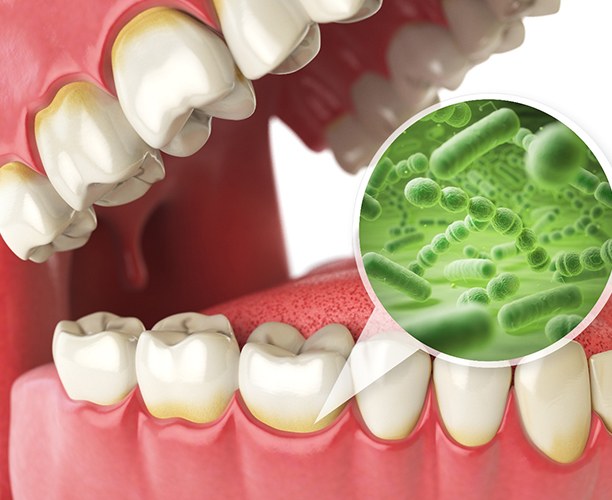
Gum disease, also known as “gingivitis,” affects more than 50% of US adults over 30. That’s why it’s essential for patients to schedule a dental visit every six months! The routine exams help us catch the infection in the early stages. If that doesn’t happen, then it can progress to periodontitis, which is the leading cause of tooth loss for patients over the age of 35. Not only that, but it has been linked to a number of chronic and systemic illnesses, including heart disease, diabetes, and stroke.
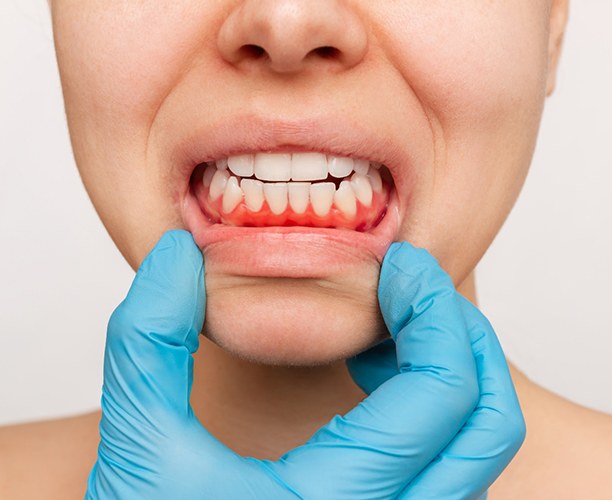
Between your biannual visits with our dedicated, experienced, and caring dentists in Las Cruces, we recommend keeping an eye out for warning signs of gum disease, including:

Oftentimes, the mildest form of gum disease can be treated with more frequent professional cleanings as well as a prescription mouth rinse. However, once the infection reaches the more advanced stages, gum disease treatment in Las Cruces is required. We’re proud to offer both scaling and root planing as well as antibiotic treatment, and you can learn more about each below!
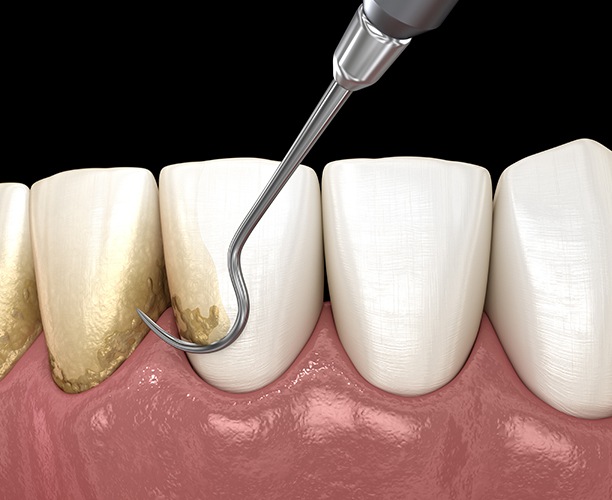
In most cases, we recommend a combination of two treatments: scaling, the removal of plaque and tartar at and below the gum line, and root planing, the smoothing of tooth roots to prevent future buildup. This process is typically completed with just local anesthesia to numb the areas to be treated. Using a number of picks, scalpels, and smoothing tools, your dentist will carefully chip away all the plaque and tartar that is irritating the gums to prevent the loss of soft tissue. This procedure may need to be completed one or more times, and it can also be performed using a soft tissue laser.

To determine whether or not scaling and root planing is ideal for you, we will begin by examining your gums. X-rays are also captured to collect as much information as possible. Depending on the condition of the gum tissue, the depth of the pockets, and the progression of your gum disease, we might recommend scaling and root planing to keep the condition at bay.
The complete scaling and root planing process is usually completed over the course of two appointments, but this can vary from person to person. To remove plaque and tartar, we will begin by scaling the teeth with dental tools. We will target the gumline and beneath the gumline where plaque, tartar, and bacteria build up.
After the scaling is done, we will move on to the root planing portion of the treatment. This is when we smooth down sections of the teeth beneath the gumline. This helps the gums to adhere to the teeth, speeding up the healing process by making it more difficult for bacteria to build up going forward.

It is normal for the gums to feel a little bit sore after scaling and root planing. There may also be some inflammation in those areas. This is temporary and should subside over the next couple of weeks. Here are some tips to help your healing process go quickly and smoothly.
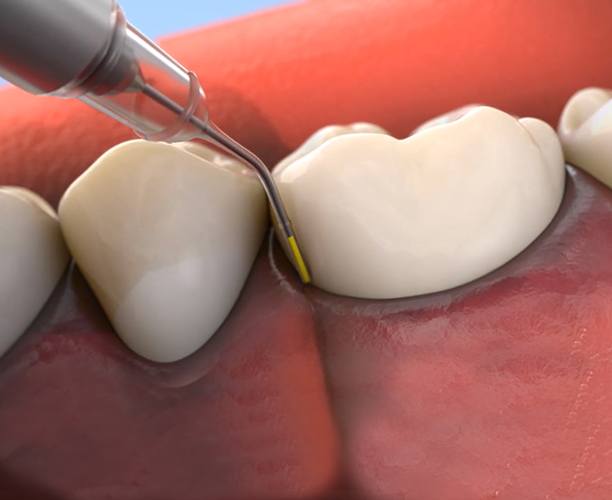
Plaque is the byproduct of bacteria that live in our mouth, breaking down foods and extracting nutrients. When the amount of plaque excreted by bacteria overwhelms the saliva’s ability to neutralize the acidity of plaque, tooth decay or gum disease may occur. For this reason, topical antibiotics may be applied to the area affected by gum disease. This keeps bacteria from populating the area, reducing plaque buildup and allowing the gums to successfully heal and reattach.